
Think Piece Authors: June Lio and Christie Lee
As we work towards the Sustainable Development Goals (SDGs) and better lives for communities around the world, trust is central to our ability to cooperate with stakeholders and further these goals. Yet trust is also becoming a challenge, as cooperation unfolds against a backdrop of geopolitical fragmentation, and seemingly transactional relationships.
SDG 17 on Partnerships for the Goals recognises that progress on the other 16 goals depends on collaboration and cooperation across borders. The UN General Assembly’s proclamation of 2026 as the International Year of Volunteers for Sustainable Development this offers us a timely moment to reflect on the role international volunteers play in building trust among stakeholders and across borders to strengthen collaboration for more meaningful and impactful outcomes.
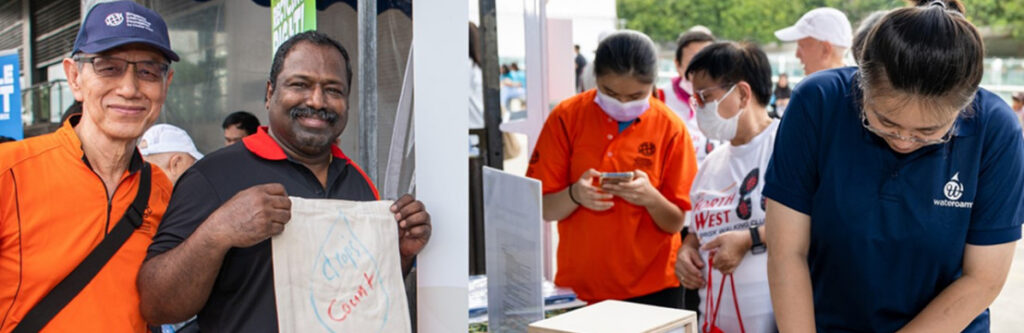
At its best, international volunteering brings people from different countries to work together to address shared challenges, drawing on each other’s expertise and experience while learning from one another. As people solve problems together, trust is built and mutual understanding deepens. As such, international volunteering can serve as an essential but often overlooked form of people-to-people diplomacy.
Making Friends from a Small-State Perspective
For a small state such as Singapore, relationships, credibility and the ability to work constructively with others carry particular significance. Building trust and deepening mutual understanding are a critical part of navigating the world. This takes time, commitment and sustained engagement.
The Singapore International Foundation (SIF) brings people together across borders to share ideas, skills and experiences. Underlying this endeavour is the notion that Singaporeans can contribute to global development by working alongside others on shared challenges, offering their time and expertise while learning from their counterparts.
In this way, people-to-people engagement adds a complementary layer to formal relations between countries. Through international volunteering, relationships across borders, communities and cultures can develop between people who might otherwise have had limited opportunities to encounter and understand each another. It also provides an opportunity to identify common challenges and collaborate on solutions.
Trust does not come easily. It is often built through the repeated experience of people showing up for one another: active listening, working through differences and gradually understanding how others see a problem, solving it together, and following through on commitments.
Building Reciprocal Relationships
The movement of expertise across borders has long been part of international volunteering. Volunteers bring knowledge, professional experience and perspectives that can be helpful in responding to locally identified challenges.
But expertise is only part of the picture. Most critically, trusting relationships are more likely to develop when volunteering partnerships are reciprocal and recognise the capabilities, knowledge, and agency of local partners. They are strengthened when priorities are identified locally, and when volunteers themselves are willing to listen, learn and be changed through the partnership.
Continuity matters too. Relationships rarely become meaningful through one-off encounters. Working together over time enables partners to move beyond initial formality, speak more candidly about what is and is not working, and find ways forward together.
At the SIF, we recognise the importance of sustained engagement. For example, In Sarawak, Malaysia, the SIF Mathematics PLUS project supports primary school teachers in improving mathematics teaching. Participating teachers have applied new approaches in their classrooms, shared them with colleagues and developed teaching materials together, with structured opportunities to continue exchanging ideas. In another SIF project in Bandung, Indonesia, master trainers developed through an earlier phase of SIF’s early childhood education partnerships went on to support a subsequent group of educators. Both these examples involve repeated engagements through collaborative planning, workshops, meetings (both on and offline) and collaboration with local education institutions.
These examples offer some insight into the conditions under which trust and cooperation can grow. The value of such engagement goes beyond what takes place during a workshop or how many people are trained. Over time, partners bring their own ideas forward, adapt approaches to their realities, speak more openly about challenges, and imagine what the next phase of cooperation could look like.
Long-Term Contributions of Volunteering
The volunteering sector has become increasingly sophisticated in measuring what programmes deliver. We count participants, track outcomes and assess changes in knowledge, skills and practice. These measures are useful, but they say less about what has changed in the relationships around a programme.
The trust built, including between people and institutions across borders, does not fit neatly into a single project indicator. Often, it reveals itself indirectly: in greater candour between partners, in whether ideas and decisions genuinely flow both ways, in more sustainable and longer-term programmes, and in whether people continue to engage after formal activities have concluded.
As a sector, we could thus pay greater attention to such mutuality, the continuity of partnerships and what endures beyond the life of a project. Doing so would not replace existing measures of programme effectiveness. Rather, it could broaden how we understand the longer-term contribution of volunteering and people-to-people engagement.
International volunteering will not resolve geopolitical divides. But when it is reciprocal, locally grounded and sustained over time, it can build trust and understanding, enable cooperation across borders, and strengthen our fabric of peace. Working side by side on a shared problem, people come to see one another not primarily as representatives of different countries, but as colleagues, partners and, sometimes, friends.
For small states and larger nations alike, that may be one of international volunteering’s enduring contributions.
As we reflect on volunteering during this International Year, perhaps we might look beyond what volunteering delivers within the life of a project, towards the trust it leaves behind and what that trust may make possible.
June Lio is Head of Programmes, International Cooperation and Volunteerism at the Singapore International Foundation (SIF), where she leads international cooperation programmes and strategic partnerships across ASEAN, India and China. She previously held regional and global roles at Save the Children in research, strategic insights, and child rights governance, and has worked across government, international organisations and civil society. Her work sits at the intersection of research, policy and practice, drawing on evidence and participatory approaches to advance collaborative partnerships and programmes.
Christie Lee is Director of the Programmes Division at the Singapore International Foundation (SIF) and a member of its senior management team. Her work includes international collaborations in education and youth development, bringing together volunteers and partners to strengthen skills and build relationships across borders.
The Singapore International Foundation aims to build ecosystems to catalyse change for a better world. We bring together people from the public, private, and philanthropic sectors across countries to harness the collective strength that is needed to address shared social challenges. Our work is focused in the areas of culture, education, health, and youth. We believe that cross-boundary collaboration is critical to foster sustainable solutions in an interconnected world. Find out more at http://www.sif.org.sg/

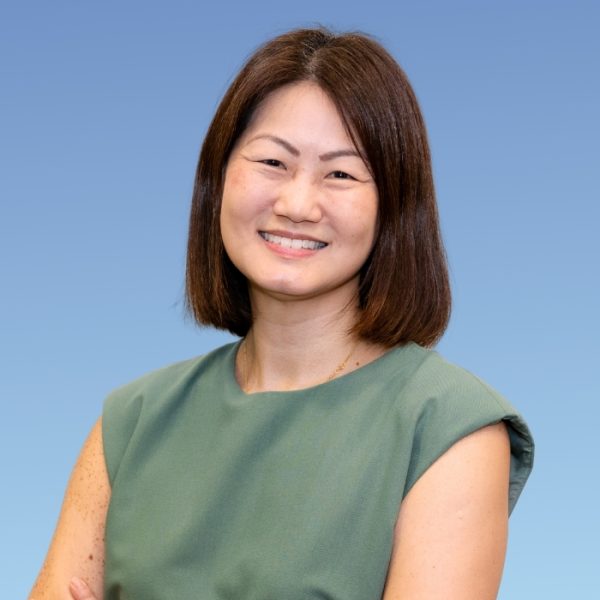
June Lio is Head of Programmes, International Cooperation and Volunteerism at the Singapore International Foundation (SIF), where she leads international cooperation programmes and strategic partnerships across ASEAN, India and China. She previously held regional and global roles at Save the Children in research, strategic insights, and child rights governance, and has worked across government, international organisations and civil society. Her work sits at the intersection of research, policy and practice, drawing on evidence and participatory approaches to advance collaborative partnerships and programmes.
Christie Lee is Director of the Programmes Division at the Singapore International Foundation (SIF) and a member of its senior management team. Her work includes international collaborations in education and youth development, bringing together volunteers and partners to strengthen skills and build relationships across borders.