
Think Piece Authors: Willoughby Niki Lee Yan Xing and Associate Professor Eduardo Araral
We begin this think piece with a personal reflection from Willoughby Niki on how the onset of COVID-19 abruptly rewrote and ultimately expanded his volunteering engagement as a way of life. He goes on to explore how technology can deepen human connections in international development.
The Saturday that didn’t happen
My weekend routine used to start the same way on Saturdays. I would lead a group of youth volunteers to an Active Ageing Centre, one of those neighbourhood hubs for seniors aged 60 and above in Singapore. The chatter and the laughter of meaningful connections were the best part. The elderly learned something new, the youth gained something they could not get from a textbook, and everyone left looking forward to the next session.
That was punctuated during the COVID-19 pandemic, and I found volunteering again in a place I had not expected. Not in an Active Ageing Centre, not in a childcare centre where you show up on a Saturday and bright smiles greet you. I was volunteering in the virtual space, behind a screen, at a desk.
Volunteering takes different forms
The physical distances that usually defined community work took the form of digital ones, and the gaps we faced were very different. With safe distancing precautions, everyone had to stay home, and programmes were put on indefinite pause. Small charities lacked the infrastructure to move their services online, and health misinformation was spreading through messaging applications and social media faster than any official clarification could reach people.
I choose to believe that the best of humanity emerges in the most uncertain of times, and to be part of it! I was part of informal responses, volunteering in ways we had not done, at a scale we had not seen. For example, putting together basic digital literacy sessions so that seniors could video call their grandchildren without needing to ask for help every time. Globally, contributing to digital communities that built fact checking tools to help community groups flag dubious health claims before they spread through online messaging groups. Volunteering was driven by passion and skillsets, which did not need formal titles or recognition.
I found my own corner in this as a lead volunteer sharing skills to build digital good projects with artificial intelligence and cybersecurity to over 300 learners across Asia and beyond. What surprised me was the way the model changed who could participate and how. Virtual volunteering turned out to be a borderless model that made volunteering accessible to people who were geographically locked out.
There’s more to volunteer for and more to volunteer with
I want to be honest about something that surprised me. I expected the virtual sessions to feel thin, transactional, like a poor substitute for the real thing, but they did not. The use of digital platforms for volunteering, and volunteering for building digital platforms, emerged as a genuine expansion of what volunteering can look like, and that gives me optimism.
Virtual volunteering is a ‘borderless’ model that made volunteering accessible to people who were previously locked out. A working parent could contribute expertise during a lunch break. A person with mobility challenges could lead a workshop from their living room. We were proving that volunteering does not require physical presence. When the pandemic eased, this digital momentum did not disappear. It evolved. Volunteers continued to log in because the flexibility suited their lives and the impact was tangible.
Strengthening Volunteering
We relate this back to the core question of the 2026 Global Volunteering Forum programme, which asks how we can strengthen volunteering without undermining its human dimensions, and I feel that we do this by letting technology handle the friction so that humans can handle the relationship.
As our digital tools mature, the nature of this support is shifting again. We are moving past the era of simple chatbots that wait for a prompt. We are entering the era of AI agents and virtual universes that unlock multiple dimensions of opportunity for strengthening volunteering and friendships. International volunteering relies heavily on relationships and cultural understanding. So where do AI agents fit into this deeply human practice? The opportunity is deciding what humans should do with the capacity technology creates. These are distinct applications of technology in volunteering, some applied, some presenting future opportunities,
In all of this, people come first. Understanding and working with volunteers to create such volunteer opportunities might just be an emerging strategy for volunteer retention and recruitment. For volunteer managers, the question becomes how we open more doors, not just for the people who already know how to walk through one, but for everyone else who has been standing outside it.
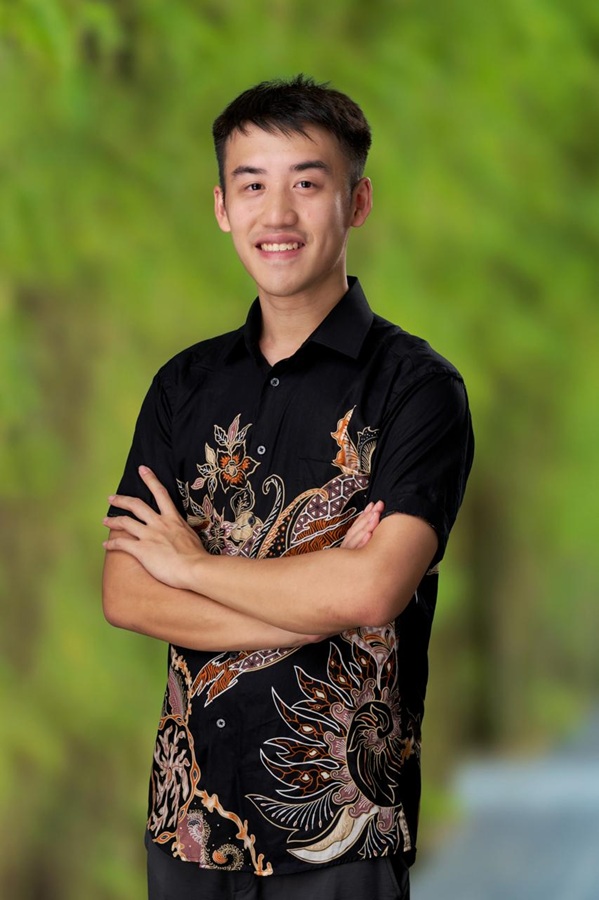
Willoughby Niki Lee Yan Xing is a youth leader and social innovator pursuing his postgraduate studies with the Lee Kuan Yew School of Public Policy, National University of Singapore. His background is in electrical engineering and interaction media design. His work lies in the intersection of technology, sustainability and international development, with a focus on human-computer interactions. Recognised globally as an AI Impact Shaper in 2022, Willoughby translates theoretical insights into empirical interventions. His work draws on systemic policy design, addressing how emerging digital platforms can be ethically managed to promote equitable economic participation and strengthen trust.
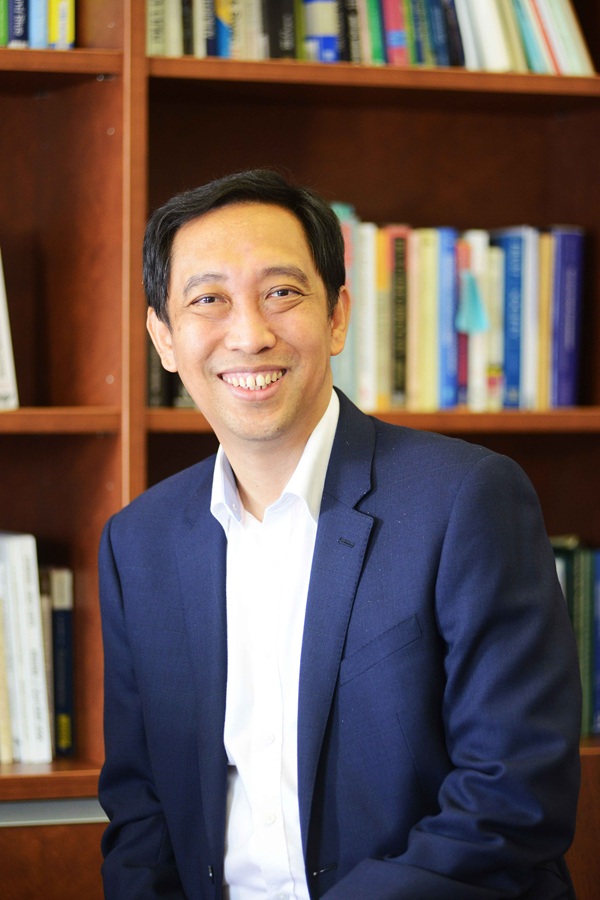
Eduardo Araral is both an academic and a practitioner with over 30 years-experience in academia and government. He holds a PhD Degree in Public Policy from Indiana University-Bloomington on a Fulbright PhD Scholarship with Elinor Ostrom (2009 Nobel Laureate in Economics) as his supervisor. As an academic, he specialises in the study of mechanisms for collective action. His work has been cited by the President of the National University of Singapore. He was consistently ranked in the top 2% of most cited scholars worldwide in a study by Stanford University. Beyond academia, he maintains an active practitioner portfolio spanning government advisory, consulting, and media engagements. He has led 20 major consultancy projects for international organizations and tech giants (such as the ADB, World Bank, UNDP, Microsoft, and Amazon) and trained over 7,000 public and private sector leaders across 50+ countries.